
Arkwright Space
Arkwright Space

Autonomous space drones.

That inspect and diagnose high-value assets at the point of need.

Space is designed for missions. We build sustainment platforms for operations.

In build · Purdue Research Park Funded government Phase 1 · under way Two booked flights · 2027 & 2028 Station pre-booking · 2029
100+ combined years of work experience in: space operations · AI · autonomy · materials · astrophysics · robotics · semiconductors Building with
Northrop Grumman Voyager Purdue University NextFlex
State ofIndiana
The roadmap InspectNow Sustain Factories in space Sustainable operations for the next 100 years
01 · The problem

A century of launch-once, fail-once.

Critical space infrastructure is fragile by design. Assets are launched, they fail, and they are replaced. Replacement and waste management (like debris removal) add no real long-term value. That is the treadmill. And no one can inspect and diagnose at the point of need today: every look requires a spacewalk, a robotic-arm pass, or a dedicated mission.

These are the assets under navigation, weather warning, communications, and the timing signals that banks and power grids run on. When they fail, the failure lands here.

$400M
Changing hands right now on a cause nobody can verify (SpainSat NG II, declared non-recoverable Jan 2026)
Space Intel Report · Hisdesat
$55M
Ceiling of today's one-off servicing missions; inspection-only starts at $15M. Every look is a dedicated mission.
NASA · Space Systems Command award records
44,900
Objects tracked in outer space by the U.S.
Apogee, 2024
180%
Space insurance loss ratio in 2023, the worst year on record; carriers exited, rates rose 50 to 150 percent
Gallagher · Insurance Insider
LAUNCH FAIL REPLACE LONG-TERM VALUE 0 REPEAT FOREVER

The treadmill. Launch, fail, replace, repeat. Play it: Orbit Keeper →

Sustained operations,
not one-time missions.

Resilience is an engineered capability. Arkwright builds the layer that delivers it, and steps off the treadmill.

02 · The system

Autonomous space drones.

One sustainment platform. Two halves, one loop, many nodes. Help in orbit is a launch away, so HORUS lives at the asset: conquering the tyranny of distance.

Intelligence at the point of need

Inspect and diagnose. The AI layer that monitors, diagnoses, and decides across critical assets, with a human in the loop. Damage found in hours, not months.

Industry at the point of need

Service. Robotic systems that service, resupply, and restore assets where they operate. No spacewalk. No dedicated mission.

Watch: the loop, run at the asset
Find → Diagnose → Decide → Act · Human in the loop
Watch: the mesh
Multi-node mesh operations
Mesh at the point of need

One HORUS inspects. A swarm of Hori sustains.

HORUS operates as a multi-node mesh: cooperating drones that share tasking, coverage, and comms. Lose one node and the mesh closes the gap. And the same mesh assembles: Space Factories →

+ Hours, not weeks

Repair at the asset instead of waiting on the ground.

+ Extend lifespan

Assets serviced in place instead of written off.

+ Decrease costs

The monetization of avoided failure.

+ Reduce disposal

Fewer replacements. Less waste on orbit.

03 · First flight system

Anatomy of Horus.

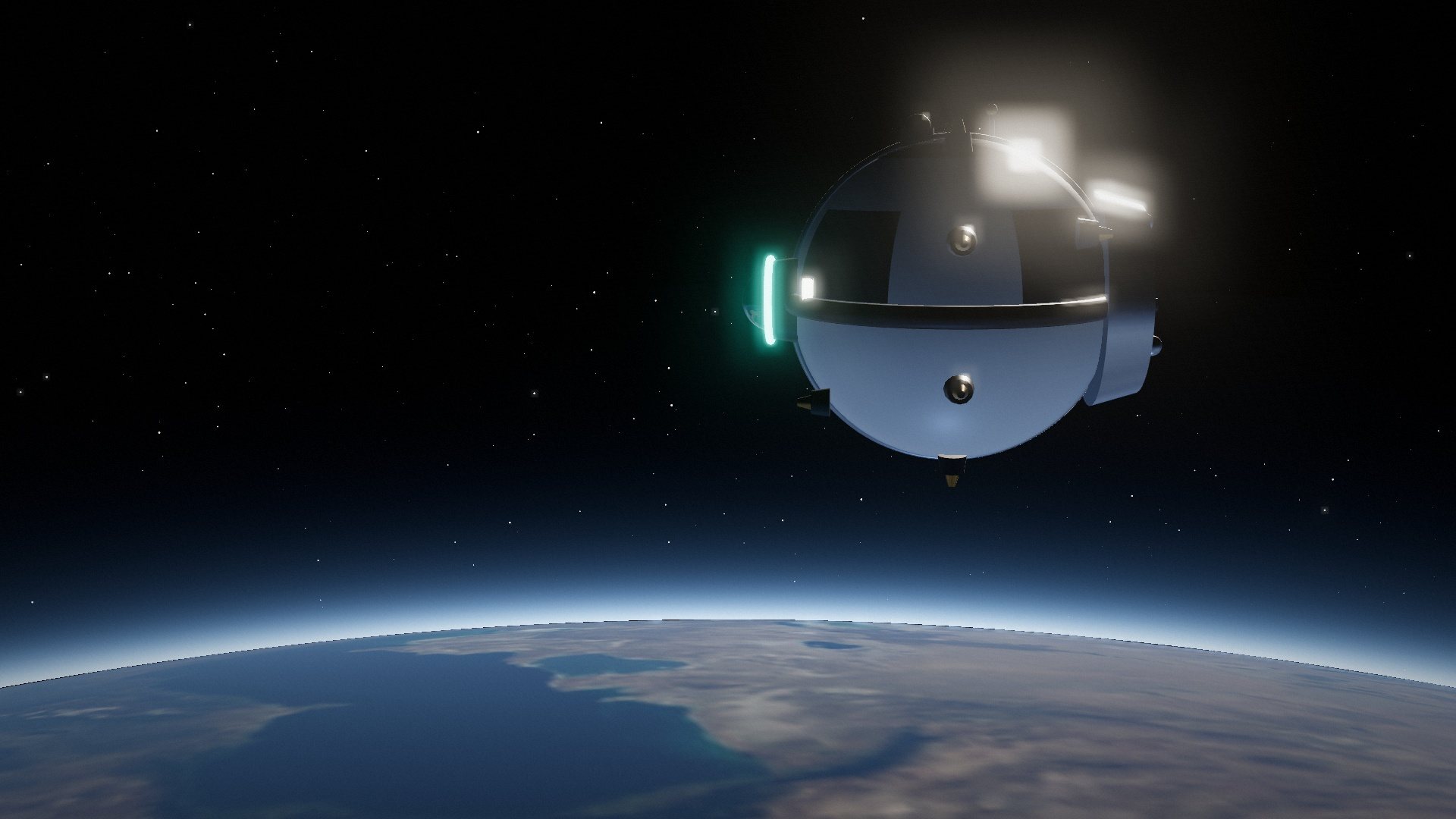
HORUS is an autonomous space drone: an orbital micro free-flyer with AI for inspection, diagnosis, and servicing of high-value assets at the point of need. Onboard AI diagnosis, patent pending. Built on flown heritage hardware. Deploys from partner vehicles and stations and operates as a mesh of cooperating nodes. Named for the eye of myth, wounded and made whole again. The workhorse drones of the space industrial revolution.

The anatomy of HORUS: sensors, comms, AI, and tools, with internal details sealed as protected IP
01
Inspect

Capture and assess up close.

02
Diagnose

Identify issues and prioritize, onboard.

03
Navigate

Autonomous precision flight.

04
Service

Perform repairs and enhancements.

Faster response. Higher mission success. Illustrative concept · Not final design
Protected IP. Full specifications shared under NDA.
04 · The arc

From inspection to industry.

Now
01
Inspect

Know the true state of every critical asset.

02
Sustain

Repair, resupply, and restore at the point of need.

03
Produce

In-space production at scale.

Others treat manufacturing in orbit as a horizon line. It is where this company comes from: a lineage that runs from electronics for space structures in 2002 to in-space manufacturing launching onboard the ISS. The drones have one job: keeping space operational. The road continues to factories in space → Proof, in order: the timeline →

On the record
Doctrine

U.S. Space Force studies on semiconductor manufacturing in space and commercial spaceports. National in-space manufacturing roadmapping with NIST and the Department of Commerce.

Team

100+ combined years of work experience across in-space manufacturing, AI, autonomous systems, materials, astrophysics, robotics, and semiconductors. A Fellow of the National Academies. Early Tesla AI robotics. Introductions on request.

Far horizon

A million-year human civilization thriving beyond Earth. That is the century arc this work serves. Today's job is nearer. Keep critical assets operational.

Pilot & partner.

Getting there is a mission. Staying is an industry.

U.S. company · Purdue ecosystem · Patent-pending onboard AI